What is the holy Kaaba in Islam?
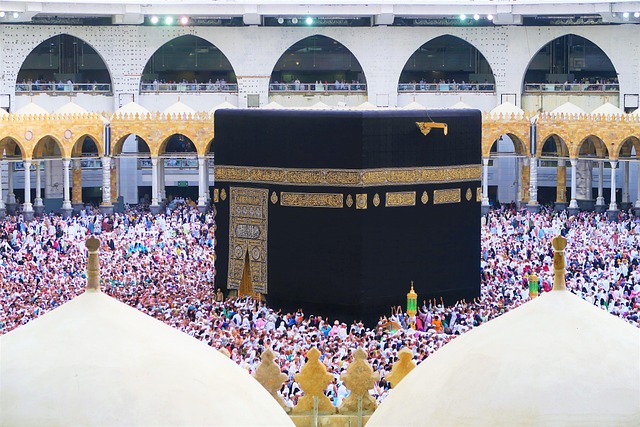
The holy Kaaba is a sacred Structure in Islam, its foundation was layed by the angles of Allah on his directive.
It is a cuboid building located in the city of Mecca Saudi Arabia. Muslims consider it the religious Site in Islam it was constructed by the prophet Ibrahim (A.S) with the help of his Son Ismail (A.S).
It is considered as the first house of worship dedicated to Allah. Its construction was a directive from Allah to Prophet Ibrahim (A.S) as shown in the holy Quran 22:26-28.
The Kaaba serves as the focal point for Muslims prayers as they face it during their daily prayers, symbolising unity and the oneness of Allah.
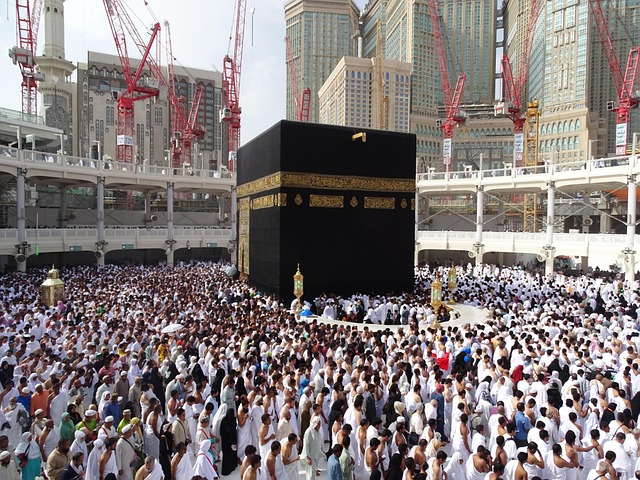
It holds immense religious significance and is a central site for the annual Hajji pilgrimage and Umrah pilgrimage where millions of Muslim pilgrims gather to perform rituals around the Kaaba.
Why is the Kaaba named so?
In the Arabic language, any four Sided object is called Mik-abu, therefore the name Kaaba comes from that Arabic word mik-abu meaning a holy four sided object in otherwords A HOLY CUBOID.
Is the Kaaba mentioned any where in the Quran?
The Quran mentions the Kaaba and its significance in Several Verses;
here are Some of those Verses that highlight its importance: (2:125), (3:96) (22-26-27).
A brief history of the Holy Kaaba.
The Kaaba has a rich and ancient history. According to the Islamic tradition, it was constructed by the prophet Ibrahim (A.S) and his son Ismail (A.S) as the first house of worship dedicated to Allah. Over the Centuries, it has undergone multiple reconstructions and renovations.
It has been a focal point of Umrah and Hajji Pilgrimage and worship for Muslims since the time of the prophet Mahammad (P.B.U.H). It holds the immense religious and historical significance as the holiest site in Islam.
Who built the holy Kaaba?
According to Islamic beliefs it is the angles that laid the foundation of the holy Kaaba, then after so many Centuries prophet Ibrahim (A.S) was ordered by the Almighty Allah to build a house of worship at the location of the Kaaba in Mecca with the help of his son Prophet Ismail (A.S) guided by Allah, they both constructed the Kaaba as a sacred Sanctuary dedicated to the worship of the one God (Allah), thus promoting monotheism.
Its construction is believed to have occurred thousands of years ago. The precise historical details are not recorded but the event holds great significance in Islamic tradition and is considered a pivotal moment in the history of monetheism
Muslims regard Prophet Ibrahim (A.S) as a revered Person and his acts of obedience and devotion to Allah including the construction of the Kaaba, serve as examples of faith and righteousness.
The Kaaba has since become the spiritual center of Islam and the focal point for Muslim's prayers and muslim pilgrims performing Umrah and Hajji holy Pilgrimage, symbolizing unity, devotion and the monotheistic beliefs of the faith. These traditions have been followed since Prophet Muhammad Peace Be Upon Him (.P.B.U.H) taught muslims about it via the holy Quran.
Why was the Kaaba built?
The purpose of the holy Kaaba's construction was to establish a central point of worship for believers, and to symbolize the unity of monotheism. It serves as a physical and spiritual focal point for Muslims around the World.
The holy Kaaba's construction is rooted in the belief in the Oneness of Allah and the importance of dedicating a sacred space for his Worship.
How did the Holy Kaaba Come to be a holy Site for Muslims?
The holy Kaaba came to be a holy site for Muslims due to its rich historical and religious signifcance.
The prophet Muhammad (P.B.U.H) the last prophet and messenger of Allah, solidified the signiffcance of the Kaaba through his teachings and actions.
What does the holy Kaaba represent for Muslims?
It represents the direction they turn in during their prayers no matter where they are. The act is known as Qibla and signifies the unity of the Muslim community, irrespective of geographical location or cultural differences.
The holy Kaaba plays a central role in the annual pilgrimage,(Hajji) one of the five pillars of Islam. Millions of Muslims from diverse backgrounds gather in Mecca to perform rituals around the Kaaba during Hajji and Umrah.
The pilgrimage Serves as a Profound Spiritual journey emphasizing humility, equality and the unity of believers.
What is the shape of the holy Kaaba?
The holy Kaaba is a cube shaped structure. It is roughly 15 meters high with sides measuring about 12 meters. The Structure is made of gray stone and marble and is oriented so that its corners roughly correspond to the points of the Compass.
The four corners of the holy Kaaba are,
1 . Rukun al hajaru al-As-Wad (Eastern Corner)
2 .Rukun al-shami (western Corner)
3 . Rukun al-Iraq (Northern Corner)
4 . Rukun al-yamani (Southern Corner)
They are also Sometimes reffered to by the cardinal direction they face, such as the Yemen Corner or the Iraqi corner.
A detailed breakdown of the Holy Kaaba corners
1 . Rukun al-Hajaru al-As-wad (Eastern Corner):
This corner houses the Black Stone and is the starting point for the circumambulation (Twawaf)
2. Rukun al-Shami (Western Corner):
This corner faces towards Syria and is sometimes called the Levantine Corner.
3. Rukun al-Iraqi (Northern Corner):
This corner faces towards Iraq and is sometimes called the Iraqi corner
4. Rukun al-Yamani (Southern Corner);
This Corner faces towards Yemen and is sometimes called the Yemen Corner.
What is the Maqam Ibrahim?
The Maqam Ibrahim or Muqam Ibrahim literally meaning station. This a small square stone which according to Islamic tradition, bears the imprint of prophet Ibrahim's feet.
According to tradition the imprint appeared when prophet Ibrahim stood on the stone while building the Kaaba when the walls became too high.
The place where it stands today is the spot where Prophet Ibrahim purpotedly offered two units prayer after the completion of the construction of the Kaaba to Allah.
Maqam Ibrahim is mentioned twice in the Quran it first appears in chapter 2:125, it instructs the believers to take the station of Ibrahim as a place of prayer. And the Maqam Ibrahim appeared again in Chapter 3:97 it is counted among one of the signs menifest and a station of peace.
The Black Stone Al hajaru al-As-wad.
It is believed that, the Black Stone was placed inside the Kaaba by prophet Ibrahim (A.S) and his son prophet Ismail. During the reign of prophet Muhammad (A.S) the black Stone was placcd on the Eastern Corner known as Ruknu (hajari-al- As-wad).
The Black Stone forms a major part of the Hajji pilgrimage which every Muslim must complete atleast once in one's life. It is the beginning and end point of the Twawaf rituals amandatory part of the Hajji.
Why do moslems kiss the Black Stone?
Moslems often Kiss the Black Stone because the prophet Muhammad (A.S) is believed to have kissed it during his life. Touching the Black Stone is thought to help absolve a person of his sins.
What is the Multazam?
Multazam is a specific area located between the Black stone and the door of the holy Kaaba.
It is considered a highly sacred place for muslims and is believed to be a place where prayers (duas) are readily accepted.
Pilgrims often cling to this area during Twawaf (Circumambulation of the Kaaba) to make supplications to Allah.
Swafah and Mar-wah
Swafah and Marwah are two small hills in Mecca Saudi Arabia that connect to the bigger one known as Abuu qubaisi. The Almighly Allah mentioned them in the holy Quran in chapter 2:158.
The race between them is part of the obligatory rites of the great pilgrimage (Hajji) and the small pilgrimage (Umrah)
It commemorates the episode of the life of Hajarah the wife of the prophet Ibrahim (A.S), mother of the prophet Ismail (A.S)
When a place that later become the city of Makkah was a desert place without human beings plants or water, Ibrahim brought his wife Hajarah and the baby Son, Ismail and left them in this place where life was impossible. In this there is agreat trial for our father Ibrahim (A.S) who was old and had wanted So much to have a Son.
As for Hajarah, when she knew that the order to leave them there came from Allah, she said; *then he will not abandon us*. We see in this reaction, how much Hajarah trusted her Lord.
As she lay under the hot desert sun, her baby was beginning to dehydrate, and she began to search for water to save her baby's life.
She went back and forth between the two hills (Swafah and Marwah) in vain until the angel Jibril appeared and struck the ground spotting the blessed spring of Zamzam, which continues to flow to this day as pilgrims drink from it every time and bring it home.
Note: The race between Swafah and Marwah is done seven times.
It is in commemoration of this episode in the life of the blessed family composed of lbrahim, Ismail and Hajarah, that Allah ordered us to reproduce these journeys between the hills Swafah and Marwah during the pilgrimage.
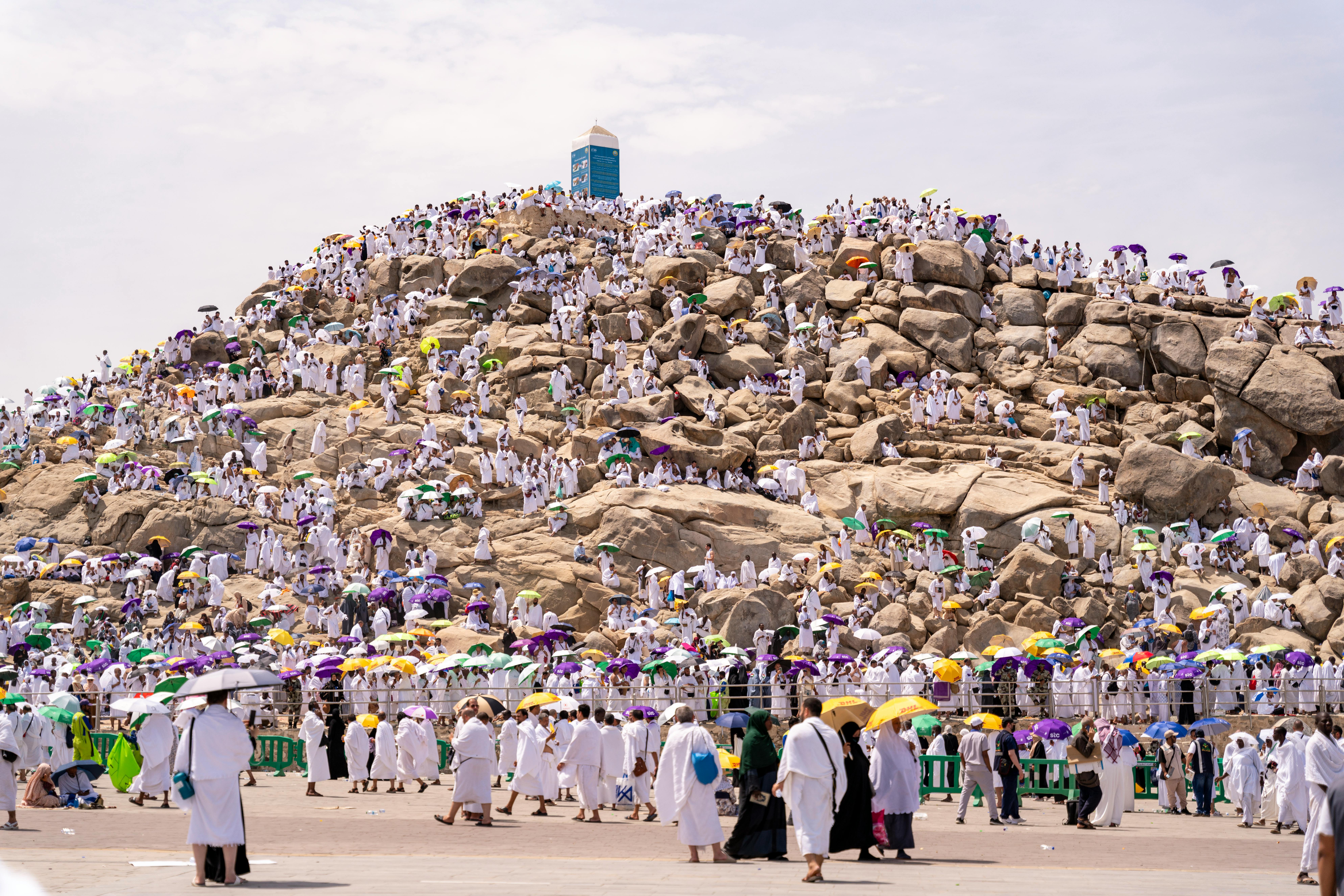
Explore the top 5 places to visit during the Hajj pilgrimage, from the sacred sites in Mecca to the historic landmarks in Medina.
Enhance your spiritual journey with these must see destinations.